
How to Choose the Right 3D Printing Filament: A Complete Guide
Choosing the right 3D printing filament is one of the most important factors affecting print quality, product performance and overall printing success.
With the rapid development of 3D printing technology, there are now many different filament materials available, including PLA, PETG, ABS, TPU, carbon fiber reinforced filaments and more. Each material has unique characteristics, advantages and suitable applications.
However, the “best” filament does not exist. The right choice depends on your specific requirements, such as mechanical strength, flexibility, heat resistance, surface appearance and printing conditions.
This guide will help you understand the differences between popular 3D printing filaments and choose the most suitable material for your projects.
Understanding Different Types of 3D Printing Filaments
PLA Filament – The Most Popular and Easy-to-Print
PLA (Polylactic Acid) is one of the most widely used 3D printing materials because of its excellent printability, low shrinkage and environmentally friendly characteristics.
Key Advantages of PLA:
-Easy printing with excellent stability
-Low warping and deformation
-Smooth surface finish
-Wide color selection
-Suitable for beginners and professional users
PLA filament is commonly used for:
-Prototypes
-Decorative models
-Educational projects / Toys
-Creative products / Display models
For users who need reliable printing performance and attractive appearance, PLA is usually the first choice.
PETG Filament – Strength and Durability
PETG combines the easy printing characteristics of PLA with improved mechanical properties and durability.
Compared with PLA, PETG offers:
-Higher impact resistance
-Better toughness
-Better moisture resistance
-Higher temperature resistance
PETG filament is suitable for:
-Functional prototypes
-Mechanical parts
-Tool components
-Protective covers
-Engineering applications
It is a popular choice for users who need stronger parts while maintaining relatively easy printing.
ABS Filament – Engineering Performance
ABS is a traditional engineering plastic widely used in industrial applications.
Its main advantages include:
-Excellent impact resistance
-Good heat resistance
-Strong mechanical performance
-Good post-processing capability
ABS filament is commonly used for:
-Automotive parts
-Industrial components
-Electronic housings
-Functional prototypes
However, ABS requires better printing conditions, usually including a heated bed and controlled printing environment.
TPU Filament – Flexible and Elastic Material
TPU is a flexible filament known for its excellent elasticity, softness and wear resistance.
Key features include:
-High flexibility
-Strong impact resistance
-Excellent abrasion resistance
-Comfortable touch feeling
TPU filament applications include:
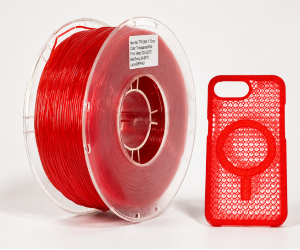
-Phone cases / Shoe components
-Wearable products
-Flexible parts
-Industrial protective components
When your project requires bending, stretching or shock absorption, TPU is an ideal choice.
A great resource for both beginners and professionals in 3D printing. Choosing the right filament based on application, strength, flexibility and printing requirements can greatly improve results. This article provides useful information to help users make better decisions when selecting 3D printing materials.
"Ante iaculis feugiat dui magna mi scelerisque euismod nascetur nullam hac consectetur class metus feugiat ullamcorper nisl eu justo in a scelerisque. Feugiat sociis platea felis sed lacus maecenas consectetur elementum vestibulum ad aenean nostra sapien dictumst condimentum lectus. A pretium orci vestibulum aenean semper et congue sapien erat a cum adipiscing sagittis."
Key Factors When Choosing 3D Printing Filament
1. Mechanical Strength
If your printed parts need to withstand pressure, impact or continuous use, choose materials with higher strength and durability.
Recommended materials:
-PETG
-ABS
-Carbon Fiber Filament
For visual models or prototypes, PLA is usually sufficient.
2. Temperature Resistance
Different applications require different levels of heat resistance.
Examples:
-PLA: Suitable for general indoor applications
-PETG: Suitable for higher-temperature environments
-ABS: Suitable for engineering applications requiring heat resistance
Choosing the right temperature-resistant material can greatly improve product reliability.
3. Flexibility Requirements
Some applications require rigid parts, while others need flexible performance.
Rigid materials:
-PLA
-PETG
-ABS
Flexible materials:
-TPU
Understanding your final product requirements is essential before selecting filament.
4. Printing Difficulty
For beginners or high-efficiency production, printing stability is important.
Easy-to-print materials:
-PLA
-PETG
More advanced materials:
-ABS
-Carbon Fiber
-TPU
The right filament can reduce printing failures and improve production efficiency.
Choosing Filament Based on Applications
Prototype Models
Recommended: PLA / PETG
Benefits: Easy printing ,Good appearance, Fast production.
Functional Parts
Recommended: PETG / ABS / Carbon Fiber Filament
Benefits: Better strength, Improved durability, Long-term performance.
Flexible Products
Recommended: TPU
Applications: Wearable products, Protective accessories, Flexible components.
Industrial Applications
Recommended: ABS / PETG / Carbon Fiber Reinforced Filaments
Applications: Automotive components, Mechanical parts, Engineering prototypes.
Final Thoughts: Choosing the Right Filament Matters
Selecting the right 3D printing filament can significantly improve printing quality, product performance and overall efficiency.
Before making a decision, consider:
What is the final application?
Does the part need strength or flexibility?
Is heat resistance important?
What printing equipment is available?
A reliable filament supplier can also help you select suitable materials based on your specific requirements.
We specialize in supplying high-quality 3D printing filaments, offering reliable products, customization solutions and supply chain support for customers worldwide.
Contact us today to discuss your 3D printing filament requirements.
